

VR haircuts are actually here
Getting a haircut used to mean walking into a shop and hoping for the best. Now, VR consultations let you test a look before the clippers even turn on. It is a practical shift for anyone tired of bad communication at the barber chair.
The core idea is simple: you meet with a stylist in a virtual environment, discuss your desired haircut, and preview the results on a digital model of your head before any scissors touch your hair. This isn’t about robots cutting your hair – it’s about using VR to enhance the consultation process, minimizing miscommunication and maximizing satisfaction. Currently, the technology relies on fairly accessible tools; most consultations happen using a standard smartphone camera combined with sophisticated software.
The appeal is clear. You can access stylists globally, bypassing geographical limitations. The risk of a drastically bad cut – something most of us dread – is significantly reduced. Plus, for those with busy schedules, it’s incredibly convenient. While it still feels a bit futuristic to many, the initial barriers to entry are surprisingly low. It’s a growing trend, but still early days, and the quality of the experience varies considerably.
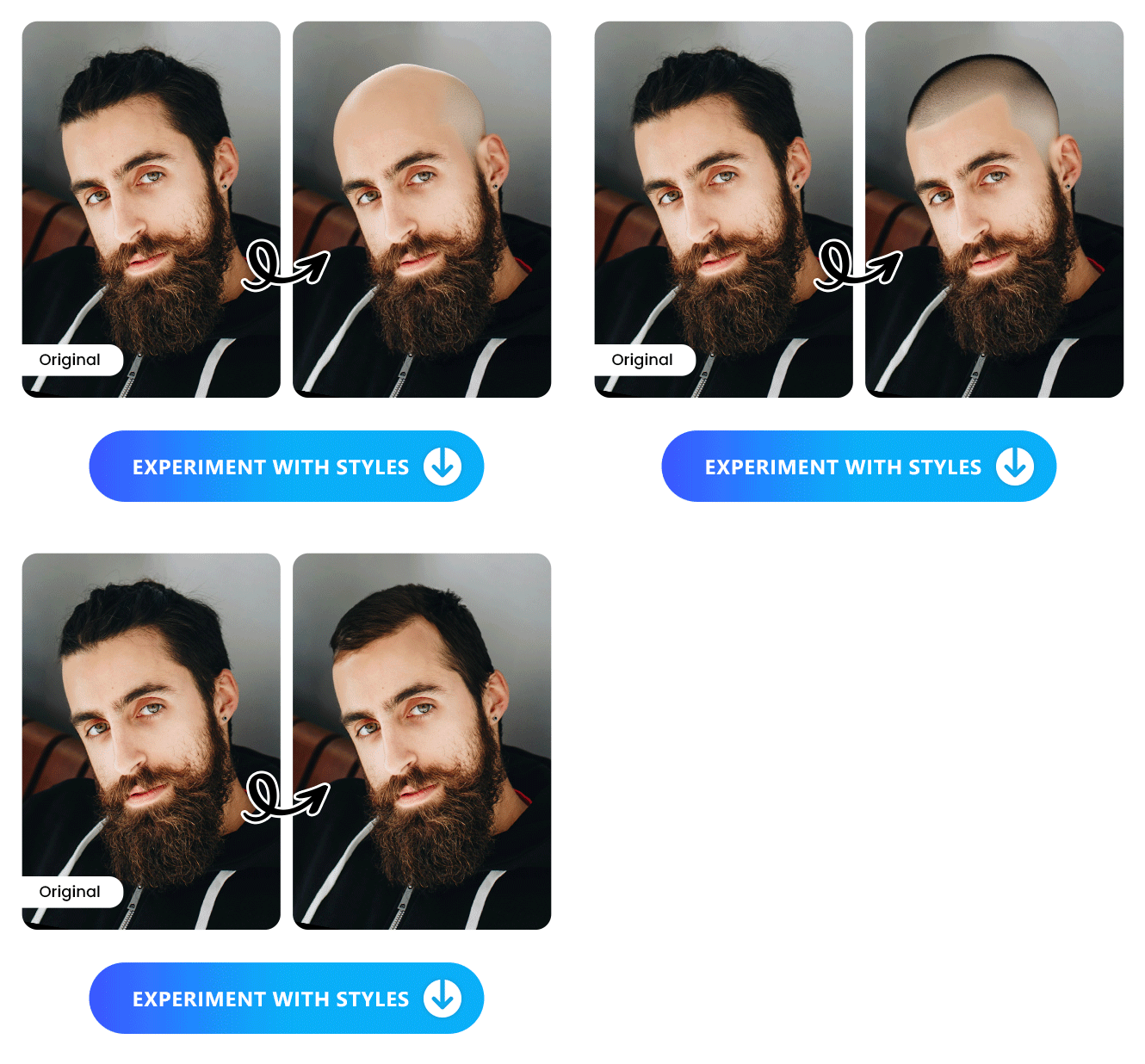
How the digital scan works
A typical virtual haircut consultation begins with capturing a detailed 3D model of your head and hair. This is often done using the camera on your smartphone or computer. The software analyzes your head shape, hair texture, and existing style to create a digital replica. The accuracy of this initial scan is critical; a poor scan will lead to an inaccurate preview.
Once the model is created, the stylist enters the virtual environment and begins to manipulate the digital haircut. You’ll usually see this happening in real-time on your screen, allowing you to provide feedback and request adjustments. Stylists can show you different lengths, fades, and styles from various angles, letting you visualize the final result before committing. The Daze Studio offers 'Virtual Cuts' where they focus on these digital transformations, and TheSalonGuy provides 30-minute private sessions for expert advice.
A key component of a successful consultation is accurate hair type analysis. The software needs to understand whether your hair is straight, wavy, curly, or coily, and how it will behave after the cut. This data informs the stylist's choices and ensures the virtual preview is realistic. Some platforms ask you to submit detailed information about your hair – porosity, density, and typical styling habits – to improve the accuracy of the simulation. This information allows the stylist to account for how your hair will naturally fall and move.
The best systems allow for dynamic adjustments. You shouldn't just see a static image of the haircut; you should be able to rotate your head, see how it looks in different lighting, and even simulate different hairstyles. This level of interactivity is what separates a good VR consultation from a simple photo editing app.
Fades that work best in VR
While VR technology is improving rapidly, not all haircuts translate perfectly to a virtual preview. Certain fade styles are easier to visualize and execute well in VR than others. Generally, cleaner, more defined fades – like taper fades and skin fades – work best. These styles rely on precise lines and transitions, which the software can accurately represent.
Complex styles like drop fades or detailed patterns are harder to get right in a headset. The software often struggles with the subtle curves where the fade drops behind the ear. VR is just a simulation; it won't capture the exact way hair lays against your skin.
I think it’s reasonable to expect that even with a great VR consultation, some styles might still require a small amount of in-person refinement. A skilled barber or stylist can make those final adjustments to ensure the fade is perfect. Don’t treat VR as a replacement for a professional haircut, but rather as a powerful tool to enhance the process.
- Taper fades work well because the software handles clean lines easily.
- Skin fades are a safe bet for VR due to the high contrast between hair and skin.
- Fade with a defined part: The structure helps translate well.
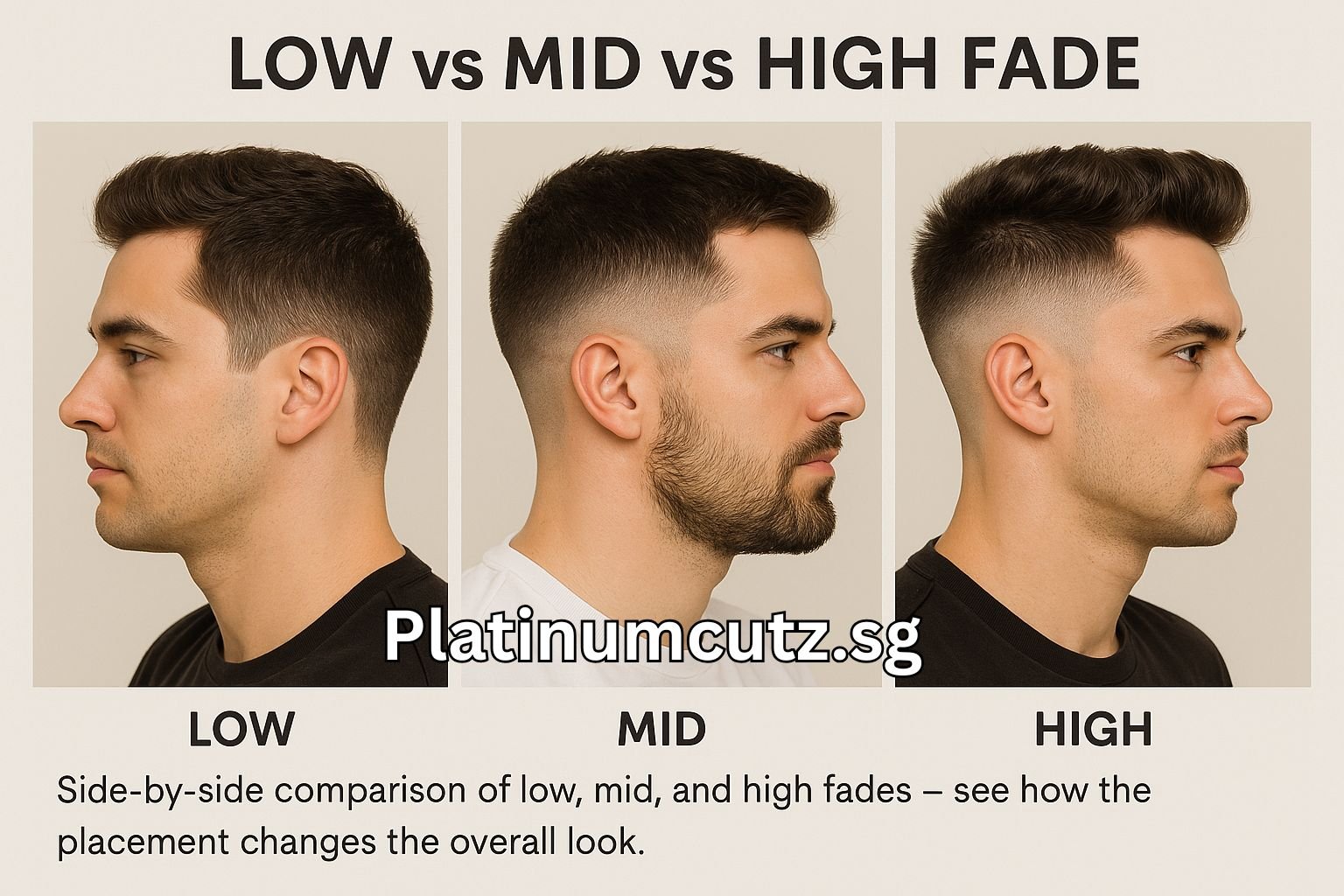
- Low Fades: Easier to assess the blend in a virtual setting.
Fade Styles & VR Preview Suitability
- Taper Fade - Excellent. The gradual nature of a taper fade translates very well to VR, allowing for clear visualization of how the length changes from the crown to the neckline.
- Low Fade - Excellent. Similar to the taper, the subtle transition of a low fade is easily represented and assessed within a virtual environment.
- Mid Fade - Good. A mid fade offers a more defined line than a low or taper fade, still rendering accurately in VR, though the preview might require more focus on the blend.
- Skin Fade (Bald Fade) - Good. While the sharp contrast is visible, accurately portraying the skin’s texture and the very short hair length in VR can be a slight challenge, but generally reliable.
- High Fade - Moderate. The higher contrast and more dramatic angle of a high fade can sometimes appear distorted in VR previews, requiring careful adjustment of the virtual camera angle.
- Drop Fade - Moderate. The curved line of a drop fade requires precise rendering in VR. Preview accuracy depends heavily on the quality of the VR software’s curve modelling.
- Design Fade - Challenging. Intricate designs and patterns are difficult to accurately represent in VR, as the software needs to precisely map the design onto the head shape. Previewing is possible, but expect discrepancies.
Hair Type Matters: VR and Texture
One of the biggest challenges facing VR haircut consultations is accurately representing different hair types. Straight hair is generally the easiest to simulate, as its movement and behavior are relatively predictable. However, wavy, curly, and coily hair each present unique challenges. The software needs to account for factors like curl pattern, density, and porosity to create a realistic preview.
Curly and coily hair, in particular, can be difficult to represent accurately. The way these hair types shrink when dry, the way they clump together, and the way they respond to different products are all complex factors that the software needs to consider. StyleSeat's blog points out that the software’s ability to accurately simulate hair texture is crucial for a satisfying result. Without this, you could end up with a haircut that looks completely different in real life.
Currently, some VR platforms handle certain hair types better than others. Platforms that utilize advanced algorithms and machine learning are more likely to produce accurate results. It's also important to choose a stylist who has experience working with your hair type. They will be better equipped to interpret the virtual preview and make adjustments accordingly.
The technology is getting better, but there's still room for improvement. I suspect we'll see more sophisticated algorithms and more accurate hair type analysis in the coming years. For now, it’s wise to manage expectations and be prepared for potential discrepancies between the virtual preview and the final result.
VR Haircut Consultation Accuracy by Hair Type (Estimated 2026)
| Hair Type | Texture Representation | Curl Pattern Accuracy | Volume Estimation | Overall Accuracy |
|---|---|---|---|---|
| Straight | Excellent | Excellent | Good | Excellent |
| Wavy (2A-2C) | Good | Good | Good | Good |
| Curly (3A-3C) | Good | Fair | Fair | Fair |
| Coily (4A-4C) | Fair | Poor | Poor | Poor |
| Straight (Fine) | Excellent | Excellent | Fair | Good |
| Wavy (Loose) | Good | Good | Good | Good |
| Curly (Tight) | Good | Fair | Fair | Fair |
| Coily (Kinky) | Fair | Poor | Poor | Poor |
Illustrative comparison based on the article research brief. Verify current pricing, limits, and product details in the official docs before relying on it.
Beyond the Cut: Styling in the Metaverse
VR isn’t just about the haircut itself; it’s opening doors to a much broader range of styling possibilities. Imagine a stylist demonstrating different styling techniques virtually – showing you how to use pomade, wax, or clay to achieve your desired look. This goes far beyond simply previewing the cut; it’s about learning how to maintain it.
You could also preview how different products will affect your hair in the virtual environment. See how a matte finish looks versus a high-shine finish, or how a strong-hold product will impact your hairstyle's volume and texture. This level of interactivity could be incredibly valuable for those who are unsure about which products to use.
This feels like a natural evolution of the VR consultation experience. It’s moving towards a full-service hair styling solution, incorporating product recommendations, tutorials, and personalized advice. The potential is there for VR to become a powerful tool for both stylists and clients, fostering a more informed and collaborative approach to hair care.

No comments yet. Be the first to share your thoughts!