
Beyond the Barber: AI and Hair
A bad haircut can ruin your week. For years, men have relied on a barber’s eye – and sometimes just luck – to achieve a style that suits them. But guesswork can be removed. Technology can objectively determine the most flattering haircut for your face. That future is arriving, powered by artificial intelligence.
AI-powered hair analysis personalizes men’s grooming. These systems move beyond generic advice to deliver recommendations tailored to your unique facial features. We’ve moved beyond simply asking the barber what they think will look good; algorithms are now entering the mix.
The core idea is simple: upload a photo, and the AI analyzes your face shape, hair type, and other characteristics to suggest haircuts that will complement your features. The technology is based on well-established principles of computer vision and machine learning. This shifts recommendations from subjective opinions to data-driven analysis.
This isn’t about replacing barbers. It provides them – and you – with another tool to ensure a great haircut every time. Consider it a second opinion, or a starting point for a conversation about what you want. The goal is to reduce the risk of ending up with a style you regret and to help you discover looks you might not have considered.
Decoding Face Shapes: The Foundation
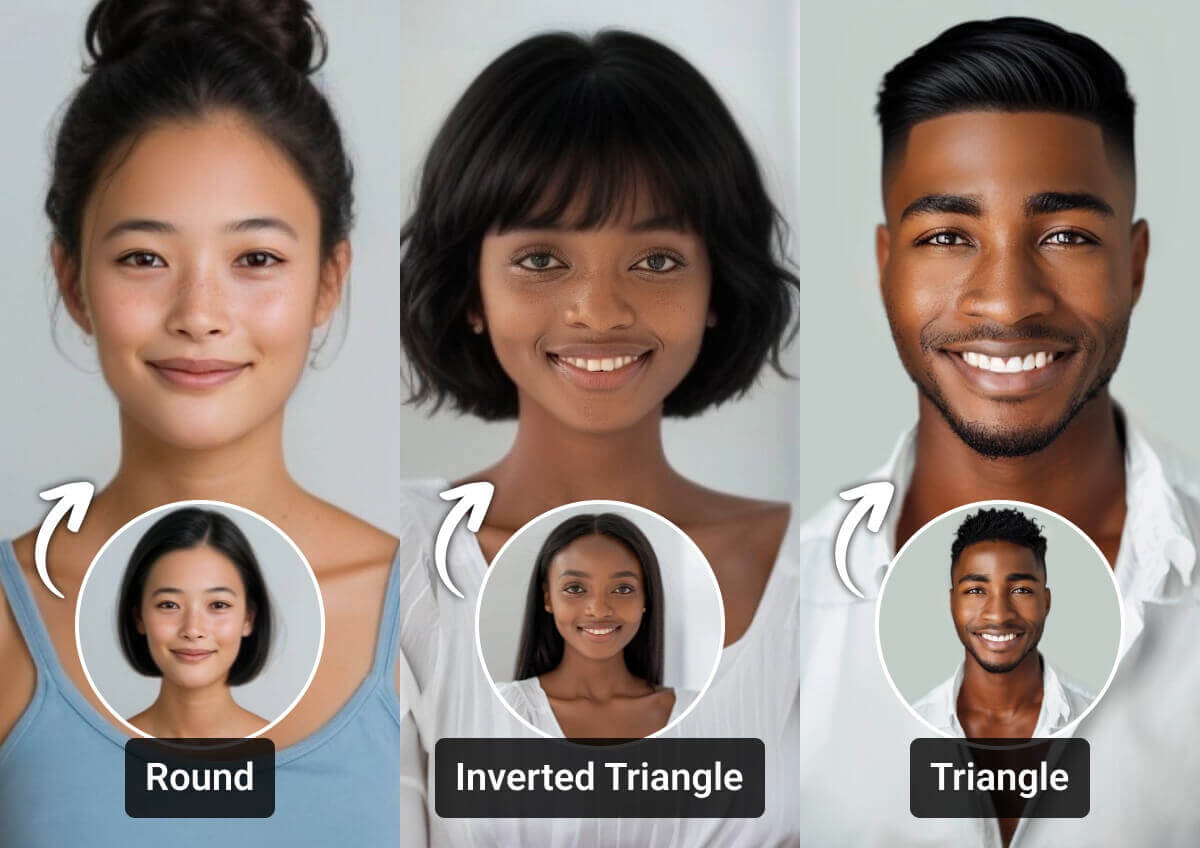
Before discussing the AI, it’s essential to understand the foundation of good haircut selection: face shape. The seven primary face shapes – oval, square, round, heart, oblong, diamond, and triangle – are determined by your face’s proportions, particularly your jawline, forehead width, and cheekbone prominence.
An oval face is considered the most versatile, with balanced proportions. A square face is characterized by a strong jawline and roughly equal width and length. A round face has full cheeks and a softer jawline, lacking strong angles. A heart-shaped face is wider at the forehead and narrows towards the chin.
The oblong face is longer than it is wide, sometimes referred to as rectangular. A diamond face features wide cheekbones and a narrower forehead and chin. Finally, a triangular face is narrow at the forehead and widens at the jawline. These descriptions are archetypes, and very few people fit neatly into just one category.
Most individuals exhibit a combination of characteristics. You might have a predominantly oval face with a slightly square jawline, for example. These subtle variations are crucial, and a good barber will take them into account. Self-assessment can be tricky, so it’s helpful to get a second opinion. Consider looking at photos of yourself from different angles and comparing them to examples of each face shape.
- Oval: Balanced proportions, forehead and jawline are similar width.
- Square: Strong jawline, roughly equal width and length.
- Round: Full cheeks, softer jawline, lacks angles.
- Heart: Wide forehead, narrow chin.
- Oblong: Longer than wide.
- Diamond: Wide cheekbones, narrow forehead and chin.
- Triangle: Narrow forehead, wide jawline.
What's Your Face Shape? Find Your Perfect Haircut!
Choosing the right haircut starts with understanding your face shape. This quick quiz will help you identify yours, setting the stage for finding styles that complement your features. While AI-powered analysis is becoming increasingly sophisticated, understanding the basics is still key! Answer honestly to get the most accurate result.
How AI Analyzes Your Head
AI hair analysis uses computer vision, facial recognition, and machine learning. Computer vision allows the system to 'see' and interpret images, while facial recognition identifies and maps key facial landmarks – the corners of your eyes, the tip of your nose, the edges of your jawline, and so on.
These landmarks are used to calculate measurements and proportions, creating a digital blueprint of your face. Machine learning algorithms are trained on vast datasets of faces and hairstyles to identify patterns and correlations between facial features and flattering haircuts. The system learns what styles look good on people with similar facial structures.
Analysis accuracy depends heavily on input image quality. Good lighting, a clear angle (typically a straight-on photo), and a neutral expression are essential. Shadows, obstructions (like hats or sunglasses), and extreme angles can all throw off the analysis. It’s pattern recognition based on the data it receives.
The exact algorithms used by each system likely involve complex mathematical models and statistical analysis. A potential concern is bias in these algorithms. If the training data is not diverse enough, the AI may perform poorly on individuals from underrepresented groups. Diverse datasets are crucial for fair and accurate results.
Hair Type & Texture: Another Piece
Face shape is only part of the equation. Your hair type and texture significantly influence how a haircut will look and behave. A style that works well for someone with fine, straight hair will likely look very different on someone with thick, curly hair. Ignoring these factors can lead to disappointment.
The Andre Walker Hair Typing System classifies hair into four types: straight (Type 1), wavy (Type 2), curly (Type 3), and coily (Type 4). Each type is further divided into subtypes (A, B, and C) based on the tightness of the curl or wave pattern.
Hair texture refers to the thickness of individual strands – fine, medium, or coarse. Fine hair lacks volume and can be easily weighed down, while coarse hair is thicker and more resilient. Texture affects how well a haircut holds its shape and how much product you’ll need to style it. Coarse texture holds a style much better than fine texture.
AI systems incorporate hair type analysis alongside face shape analysis. Some tools ask you to specify your hair type and texture, while others assess it from the image. The goal is to provide more personalized recommendations that account for all relevant factors.
Cut Recommendations by Face Shape
Here are specific haircut recommendations. Remember, these are guidelines, not rigid rules. Your personal style and preferences should always be the deciding factor. Hair type and texture will influence the final outcome.
Oval Face: You’re in luck! Most styles work well with an oval face. A classic taper fade, a side part, a textured quiff, or even a longer, flowing style can all look great. Experiment with different lengths and textures. A mid fade with slightly longer hair on top offers versatility.
Square Face: Soften the angles with layered cuts and styles that add volume on top. A textured quiff, a side part with volume, or a faux hawk can all work well. Avoid blunt cuts and harsh lines. A low fade can help balance a strong jawline. For thicker hair, a longer style with layers can create movement.
Round Face: Add height and length to your face with styles that have volume on top. A pompadour, a quiff, or a textured crop are good options. Avoid styles that are too short or too flat on top. A high fade can visually elongate the face. A good barber can add layers to create angles.
Heart-Shaped Face: Balance the wider forehead with styles that add width to the chin area. A side part with volume, a textured crop, or a short, layered cut can all work well. Avoid styles that are too voluminous on top. A medium fade with a slightly fuller beard can create balance.
Oblong Face: Add width to your face with styles that have volume on the sides. A side part with volume, a textured crop, or a layered cut can all work well. Avoid styles that are too tall on top. A classic taper fade with moderate length on top is a safe bet. A full beard can also help widen the face.
Diamond Face: Soften the cheekbones with styles that add volume to the forehead and chin areas. A side part with volume, a textured quiff, or a layered cut can all work well. Avoid styles that are too severe or angular. A mid fade with a slightly textured top can complement the face shape.
Triangular Face: Add width to the forehead with styles that have volume on top. A pompadour, a quiff, or a textured crop can all work well. Avoid styles that are too short or too flat on top. A low fade can help balance the wider jawline. A well-groomed beard can also add width.
Recommended Haircuts Based on Face Shape and Hair Type (2026)
| Face Shape | Hair Type | Recommended Haircuts | Suitability |
|---|---|---|---|
| Oval | Straight | Classic Taper, Side Part, Textured Crop | Excellent |
| Oval | Wavy | Quiff, French Crop, Medium Fade | Excellent |
| Oval | Curly | High Top Fade, Textured Pompadour, Curly Fringe | Good |
| Oval | Coily | Afro, Fade with Shape-Up, Textured Twists | Excellent |
| Square | Straight | Textured Quiff, Side Swept Undercut, Layered Crop | Good |
| Square | Wavy | Side Part with Volume, Wavy Fringe, Medium Fade | Good |
| Square | Curly | Curly Quiff, High Top Fade, Defined Curls | Good |
| Square | Coily | Afro, Taper Fade, Coily Texture with Defined Shape | Good |
| Round | Straight | Pompadour, Quiff with Height, Textured Crop | Good |
| Round | Wavy | Side Swept Hair, Volume at the Crown, Textured Waves | Good |
| Round | Curly | Defined Curls with Height, Curly Fringe, Volume on Top | Good |
| Round | Coily | High Top Fade, Afro with Tapered Sides, Textured Coils | Good |
| Heart | Straight | Side Part, Textured Crop, Classic Taper | Good |
| Heart | Wavy | Wavy Fringe, Side Swept Hair, Medium Fade | Good |
| Heart | Curly | Curly Fringe, Textured Pompadour, Defined Curls | Good |
| Heart | Coily | Afro, Fade with Shape-Up, Textured Coils | Good |
Illustrative comparison based on the article research brief. Verify current pricing, limits, and product details in the official docs before relying on it.
AI Tools: What’s Available Now?
The market for AI-powered hair analysis tools is new, and options are evolving rapidly. Several apps and websites claim to offer personalized haircut recommendations, but their accuracy and effectiveness vary considerably. Approach these tools with skepticism.
Stylebook allows you to upload photos and receive style suggestions, though its primary focus isn’t solely on haircuts. Perfect Hair focuses on virtual try-on experiences, allowing you to see how different hairstyles would look on your face. These tools generally require a clear, front-facing photo for accurate analysis.
Many tools offer basic features for free, but premium features – such as more detailed analysis or access to a wider range of styles – often require a subscription. Pricing varies, but expect to pay $5 to $20 per month for a premium subscription. Privacy is also a consideration. Read the terms of service and understand how your data is being used.
These tools can be a useful starting point for exploring different styles and getting a general idea of what might suit you. The best way to find the perfect haircut is still to consult with a skilled barber or stylist.
The Future of Personalized Grooming
The future of personalized grooming will be more data-driven and immersive. Expect more sophisticated AI algorithms that account for individual preferences, lifestyle factors (such as your profession and hobbies), and even your clothing style. The goal is a truly holistic grooming experience.
undefined your smartphone or a VR headset. This would allow you to see exactly how a style will look before committing to it. It could also help you communicate your desired look more effectively to your barber.
AI might also be able to predict how a haircut will age, taking into account factors such as hair growth patterns and changes in facial structure. This could help you choose a style that will continue to look good for years to come. The potential is vast, but it’s still largely speculative.
The impact on barbers and stylists remains to be seen. I believe AI will primarily serve as a tool to augment their skills, rather than replace them. Barbers will still be needed to execute the cuts and provide personalized advice. The future is likely to be a collaboration between humans and machines, resulting in a better grooming experience for everyone.


No comments yet. Be the first to share your thoughts!