
The Rise of the Textured Crop Fade
The textured crop fade is a defining men's haircut. It’s everywhere – from high-end barber shops to social media feeds. This style offers genuine versatility and works on many different hair types, which is a big part of its appeal.
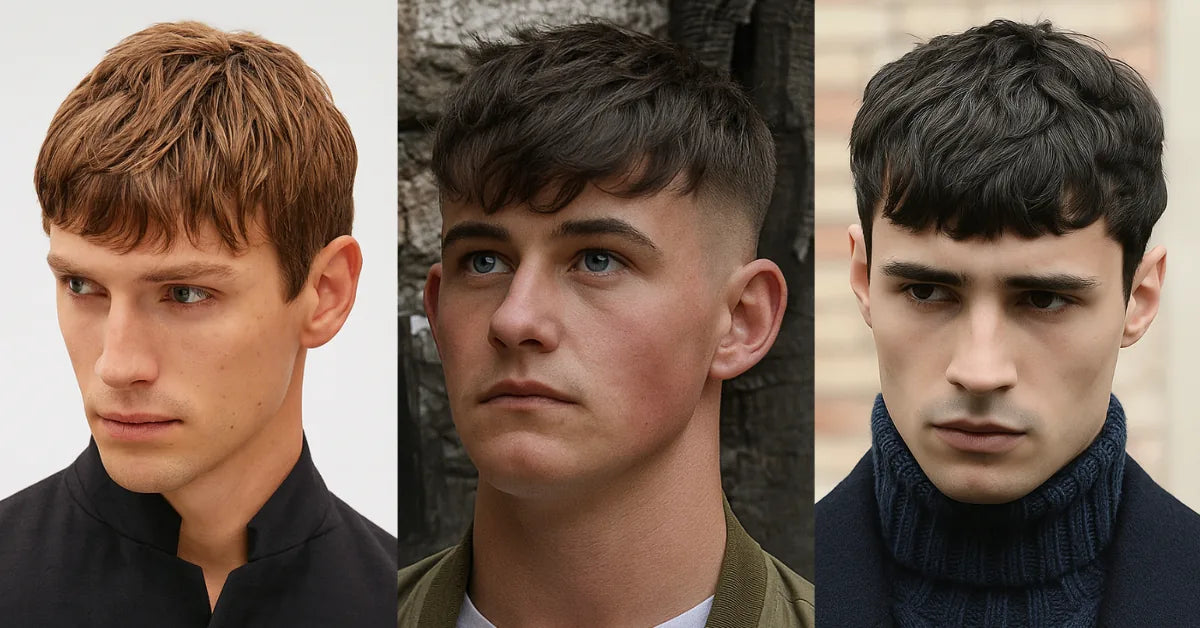
This style evolved from the classic French crop, blended with contemporary fade techniques. The French crop, with its longer length on top and shorter sides and back, was already popular. Adding a skillfully executed fade elevates it to something new, feeling both intentional and effortlessly cool.
The real driver behind its popularity is adaptability. You can style it for a polished, professional look with product and a comb, or rough it up for a more relaxed, textured vibe. This makes it ideal for guys who want a style that transitions seamlessly from the office to a night out. Celebrities like Timothée Chalamet and other figures are adopting variations of the look.
Social media amplifies the trend. Pinterest is flooded with inspiration, Instagram showcases countless variations, and YouTube offers tutorials – like the detailed guide from Faded Culture (uploaded April 14, 2025) on achieving a textured crop with a mid fade. This style is well-documented, making it accessible to anyone willing to learn.
Understanding the Core Elements
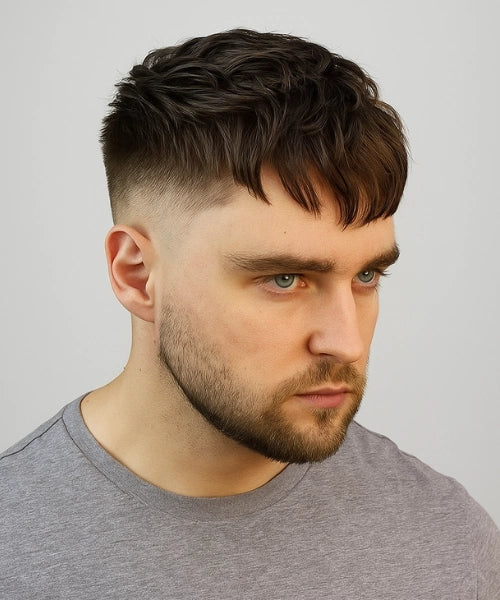
A textured crop fade is built on three core elements: the crop itself, the texture, and the fade. Each component is important, but how they interact defines the final look. The crop refers to the length on top, generally between 3 and 6 inches. This is your styling canvas.
Texture separates this from a standard crop. It’s achieved through techniques like point cutting or texturizing shears, creating a deliberately messy, piecey look. A lack of texture makes it look flat. The fade is the transition from longer hair on top to shorter hair on the sides and back. Options include skin fade, mid fade, or taper.
How the fade blends with the textured crop makes all the difference. A sharp, dramatic fade creates a bolder, more modern look, while a softer taper is more subtle and classic. The fade height also impacts the overall appearance. A high fade is more eye-catching, while a low fade is more understated.
Think of it like building with blocks. You need all three pieces – the length, the texture, and the fade – to create a solid structure. Get one element wrong, and the whole thing can fall apart. Understanding these components is the first step to getting the look you want.
Face Shape & Crop Fade Variations
A textured crop fade isn't one-size-fits-all. You need to adapt it to your face shape to make it work. A skilled barber will analyze your features and recommend a variation that complements them. I've seen too many guys walk out with a fade that doesn't suit their face.
For those with an oval face, you have a lot of freedom. Most variations will look good, but a mid fade generally works well, providing a balanced look. If you have a square face, a lower fade can help soften your jawline. Avoid anything too high and tight, as it can accentuate the angles. A softer taper is generally a better choice for a round face.
Heart-shaped faces benefit from a fade that adds volume at the crown. This helps balance the wider forehead. A longer crop on top is also a good idea. For longer faces, a shorter crop and a slightly higher fade can create the illusion of width. Don’t be afraid to ask your barber for their opinion.
Here are questions to ask your barber: 'What fade height do you recommend for my face shape?', 'How much texture should I aim for?', and 'Can you show me examples of this style on people with similar features to mine?' Don’t just show them a picture; have a conversation.
- What fade height do you recommend for my face shape?
- How much texture do you think I should aim for?
- Can you show me examples of this style on people with similar features to mine?
Texture Techniques: Point Cutting vs. Razor
Creating texture is arguably the most important part of the textured crop fade. Barbers use two main techniques: point cutting and razor cutting. Each has its own strengths and weaknesses. Point cutting involves holding the shears vertically and snipping into the hair, creating a softer, more natural texture.
Point cutting is less aggressive. It creates a lived-in look that's easy to style. The downside is that it can be more time-consuming, especially for thicker hair. It requires precision and patience. You're building texture gradually, layer by layer.
Razor cutting is much faster. It creates a more dramatic, piecey texture. The razor glides through the hair, removing weight and creating movement. However, it's also harder to control. A skilled barber is essential to avoid an uneven or choppy look.
Point cutting creates a more natural, effortless vibe. It’s forgiving and allows for more subtle variations in texture. But if you want a really bold, defined texture, a razor cut might be the way to go. It depends on your hair type and your personal preference.
Styling Your Textured Crop: Product Guide
Now it’s time to style it. The right product is crucial. Different hair types require different levels of hold and finish. For fine hair, you'll want something lightweight that adds texture without weighing it down. For thicker hair, you can go for something with more hold.
Matte clays are a great all-around option. They provide texture and hold without looking greasy. Hanz de Fuko Claymation is a classic choice, offering a strong hold and a natural matte finish. Texture pastes are similar to clays but tend to be more pliable, allowing for restyling throughout the day. Layrite Cement Clay is another excellent choice, offering a strong, moldable hold.
Sea salt sprays create a beachy, textured look. They add volume and grip, making it easier to style. Pomades, traditionally associated with slicked-back styles, can also be used to create texture if applied sparingly and worked through the hair. Just avoid anything too shiny.
undefined good choice. If you want a more polished look, a texture paste or a matte pomade might be better.
Styling Product Guide for Textured Crop Fades
| Product Type | Hold | Finish | Hair Type | Best For |
|---|---|---|---|---|
| Clay | Medium | Matte | Medium to Thick | Texture & Control |
| Paste | Low to Medium | Natural | Fine to Medium | Volume & Piecey Texture |
| Spray (Texturizing) | Light to Medium | Natural | All | Volume & Overall Texture |
| Pomade (Water-Based) | Medium to High | Shiny | Medium to Thick | Control & Sleek Texture |
| Clay Pomade | Medium | Matte | Medium | Texture and Hold |
| Paste (Fiber) | Medium | Natural | Fine to Medium | Control and Definition |
| Sea Salt Spray | Low | Natural | All | Beach Waves & Texture |
Illustrative comparison based on the article research brief. Verify current pricing, limits, and product details in the official docs before relying on it.
Fade Maintenance: Barber Visits & At-Home Care
A textured crop fade requires regular maintenance to keep it looking sharp. The fade is the part that grows out the fastest, so you’ll need to visit your barber every 2-4 weeks for a touch-up. Don't let it go too long, or you’ll lose the crisp lines that define the look. It's an investment, but it's worth it.
Regular trims are also important to maintain the shape of the crop. Even if you're not getting the fade touched up, getting the length trimmed every few weeks will keep it looking its best. In between barber visits, proper at-home care is essential. Wash your hair with a quality shampoo and conditioner.
I always tell guys to invest in a good quality shampoo and conditioner. Avoid harsh chemicals and sulfates, as these can strip your hair of its natural oils. A moisturizing conditioner will help to keep your hair healthy and manageable. Don't overwash your hair either; 2-3 times a week is usually sufficient.
Also, be mindful of your styling routine. Avoid using too much product, as this can build up and weigh your hair down. And don’t be afraid to experiment with different styling techniques to find what works best for you.
Troubleshooting Common Issues
Even with the best haircut and styling routine, you might encounter a few problems. Uneven texture can be caused by inconsistent cutting or improper styling. If you notice this, try using a texturizing spray or a sea salt spray to even things out. A fade growing out quickly is inevitable, but you can slow down the process by getting regular touch-ups.
Difficulty styling can be caused by a number of factors, including hair type, product choice, and technique. If you're struggling to get the look you want, try watching some YouTube tutorials or consulting with your barber. The Faded Culture tutorial on YouTube is a great resource.
What if your fade looks patchy? This usually means the fade wasn't blended properly. Talk to your barber about it and ask them to even it out. What if you can't get the texture right? Experiment with different products and techniques until you find what works for you. Don’t be afraid to try something new.
The goal is to empower you to fix small problems yourself. Don't be afraid to experiment and learn what works best for your hair. A little bit of effort can go a long way.
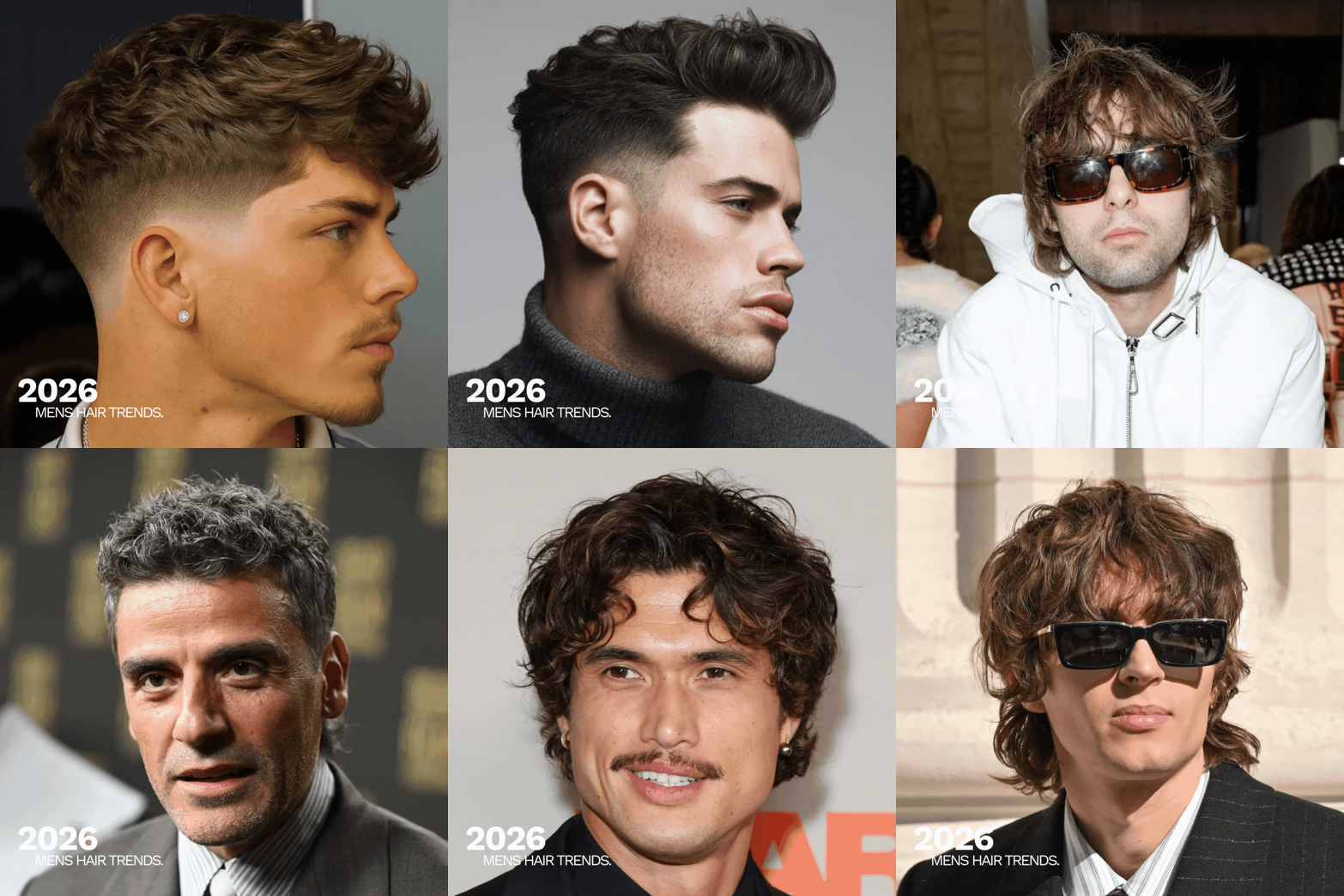
2026 Trends: Crop Fade Hybrids
Looking ahead to 2026, we’re starting to see some interesting variations on the textured crop fade emerge. One trend is the textured crop with a disconnected undercut. This involves keeping the hair on top long and textured, while the sides and back are disconnected and faded very short.
Another trend is combining the crop fade with a hard part. This creates a more structured, defined look. It’s a bit more formal than the traditional textured crop fade, but it still offers plenty of versatility. I’m seeing a lot of guys experiment with more dramatic textures, using techniques like razor cutting to create a really bold look.
Color is also becoming more popular. Subtle highlights or lowlights can add depth and dimension to the haircut. Think of incorporating natural tones that complement your skin tone. It’s a way to personalize the look and make it your own.
The textured crop fade remains a strong foundation, but these new variations demonstrate that the style is evolving. It’s a dynamic look that’s constantly being reinterpreted, ensuring it remains fresh and relevant.


No comments yet. Be the first to share your thoughts!