
The shift to smart styling
For decades, hair tools have largely operated on the same principle: apply heat. We’ve seen incremental improvements in temperature control, materials, and design, but the fundamental approach remained unchanged. That’s all shifting now. We’re witnessing a genuine revolution in hair styling, driven by the integration of artificial intelligence. It’s not just about hotter or cooler – it’s about smarter.
The real change isn’t simply automating existing processes; it's the ability to personalize styling based on an individual’s unique hair characteristics. Early AI applications focused on basic heat adjustments, but the technology has moved far beyond that. We're seeing devices that analyze your hair in real-time, adapting performance to minimize damage and maximize style. The groundwork for this was laid over the last few years, but 2026 feels like the year it truly arrives.
At CES 2026, the floor was full of tools that ditch standard heat levels for sensors. These devices respond to what your hair actually needs in the moment. We're moving away from the old one-size-fits-all approach toward gear that actually understands hair health.

How tools measure your hair
At the heart of this AI revolution is the ability to accurately analyze hair. These smart tools aren’t guessing at your hair type; they're measuring it. The sensors being incorporated into these devices can assess several key factors, including moisture content, porosity (how well hair absorbs and retains moisture), density (the number of strands per square inch), and texture (curl pattern, thickness).
The data collected isn’t just raw numbers, though. Sophisticated algorithms process this information to create a personalized hair profile. This profile then dictates how the tool operates – adjusting heat levels, airflow, and even the duration of styling. This shift from generalized heat settings to customized profiles is a game-changer, particularly for individuals with complex hair needs.
Data privacy is a real concern here. Many of these tools upload your hair profile to the cloud to tweak their algorithms. You should check the privacy policy before buying to see if you can delete your data. Regulation hasn't caught up to smart brushes yet, so the burden is on us to check the fine print.
The way these tools work isn’t magic, it’s physics and data science. Sensors emit infrared light or use conductivity measurements to determine moisture levels. Density is often calculated using image processing and pattern recognition. Ultimately, the goal is to understand the unique properties of your hair and tailor the styling process accordingly.
Better tech for curls and coils
Historically, curly and coily hair types have been underserved by the hair tool industry. Traditional styling tools often lacked the precision and control needed to achieve optimal results without causing damage. AI-powered tools are beginning to address this imbalance, offering features specifically designed for textured hair.
The key is minimizing heat damage while enhancing curl definition and reducing frizz. Many new tools utilize infrared technology, which heats hair from the inside out, reducing the risk of scorching the outer cuticle. Others incorporate ionic technology to neutralize static and smooth the hair shaft. What’s important is that the algorithms are trained on diverse hair textures; a tool trained solely on straight hair won’t perform well on 4C coils.
I’ve been particularly impressed with the advancements in diffusers. The latest models feature adjustable airflow and heat settings, allowing users to customize the drying process to their specific curl pattern. Some even incorporate AI to detect and adapt to changes in moisture levels during drying, preventing over-drying and frizz. Brands like Dyson are leading the charge here, but other companies are quickly catching up.
AI isn't a magic fix. If a company only trained its software on straight hair, it won't work for 4C coils. I look for brands that prove they tested on a wide range of textures. Check reviews from people with your specific curl pattern before dropping $400 on a dryer.
- Dyson Supersonic r™ Professional Hair Dryer: Offers intelligent heat control and a diffuser attachment optimized for curls.
- L’Oréal Professionnel Steampod 3.0: Uses steam technology to gently straighten and smooth curly hair.
- Zuvi Halo Hair Dryer: Uses light energy instead of extreme heat to maintain hair moisture, making it a strong alternative for fragile curls.
Featured Products

AI Technology for optimized drying · 7 drying modes and 4 attachments · Ionic technology for reduced frizz
This AI-powered diffuser is specifically curated to cater to the unique needs of curly and coily hair, offering advanced features for effortless and precise styling.

1.75-inch ceramic-coated plates · 9 smart temperature control settings · 20-second fast heat-up and auto shut-off
This AI-powered hair tool is specifically curated to cater to the unique needs of curly and coily hair, offering advanced features for effortless and precise styling.

Automatic rotating barrel for effortless curls · 500 million ionic for frizz control · Lightweight and dual voltage for travel
This AI-powered hair tool is specifically curated to cater to the unique needs of curly and coily hair, offering advanced features for effortless and precise styling.

Versatile styling capabilities · Ergonomic design for comfortable use · Suitable for various hair types
This AI-powered hair tool is specifically curated to cater to the unique needs of curly and coily hair, offering advanced features for effortless and precise styling.
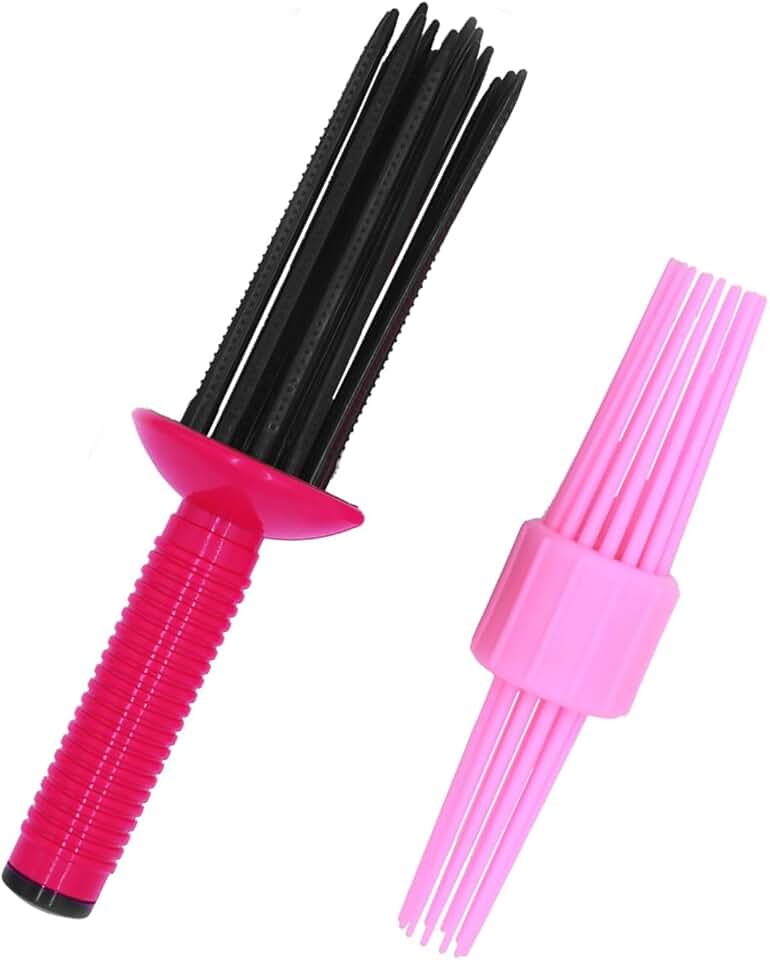
Set of 2 curling roll combs in three sizes · Designed for creating curly hairstyles · Suitable for casual wear or special events
These AI-powered hair tools are specifically curated to cater to the unique needs of curly and coily hair, offering advanced features for effortless and precise styling.
As an Amazon Associate I earn from qualifying purchases. Prices may vary.
Straightening without the damage
AI is also transforming the world of straightening and smoothing. The goal is to achieve sleek, polished results without compromising hair health. Traditional flat irons often rely on extremely high heat, which can cause significant damage over time. Newer tools are using AI to adapt heat levels based on hair thickness and moisture content.
Features like automatic shut-off and even heat distribution are becoming standard. However, the real innovation lies in the ability of these tools to "learn" your hair. Over time, they can analyze your styling habits and adjust settings to deliver consistently optimal results. This personalization minimizes the risk of heat damage and ensures a smoother, more efficient styling process.
I’m cautiously optimistic about the potential for AI to reduce our reliance on harsh chemical straightening treatments. While these treatments can deliver dramatic results, they can also severely damage hair. If AI-powered tools can consistently achieve comparable results with minimal heat, it could be a game-changer. It's still early days, but the potential is there.
Beyond Styling: Automated Hair Care
The future of smart hair tools extends far beyond styling. We’re starting to see a wave of AI-powered hair care devices that promise to revolutionize how we maintain healthy hair. This includes smart brushes that analyze scalp health, identifying areas of dryness, oiliness, or inflammation.
Some companies are developing devices that deliver personalized conditioning treatments based on AI analysis. These treatments can target specific concerns, such as dryness, damage, or color fading. The idea is to provide a customized hair care routine that addresses your individual needs. It’s preventative hair care, driven by data.
Another exciting area is hair growth monitoring. Devices are being developed that can track hair growth patterns and identify potential issues early on. This could be particularly valuable for individuals experiencing hair loss or thinning. While these tools are still in their early stages of development, they represent a significant step forward in personalized hair care.
Standout Tools from CES 2026
CES 2026 showcased a number of impressive innovations. One standout was the NeuralStylist from HairTech, a hairdryer that uses AI to analyze hair texture and airflow in real-time, adjusting heat and speed to prevent damage. It claims a 30% reduction in heat exposure compared to traditional dryers.
Another notable product was the ColorMatch AI from ChromaLabs. This device scans your hair and skin tone to recommend hair colors that complement your complexion. It also provides a virtual try-on feature, allowing you to see how different shades would look before you dye your hair. The color matching was surprisingly accurate during demos.
Finally, the ScalpSense Pro by HealthHair caught my attention. This smart brush analyzes scalp health, detecting dryness, oiliness, and inflammation. It then recommends personalized hair care routines and products. It's not a styling tool, but it's a crucial component of preventative hair care. The data it provides could be invaluable for maintaining a healthy scalp.

L'Oréal Professionnel Paris Absolut Repair Hair Mask - Nourishing Protein Treatment, Hydrates, Repairs Damage & Adds Shine, for Dry & Damaged Hair, 250ml
- Deeply nourishes and hydrates dry and damaged hair
- Repairs hair structure with potent protein complex
- Restores shine and softness for a healthier look
While not an AI-powered styling tool itself, the Absolut Repair Hair Mask represents the advanced, science-backed approach to hair health that complements the AI revolution, ensuring your hair is in optimal condition for any smart styling.
View on Amazon →As an Amazon Associate I earn from qualifying purchases.
No comments yet. Be the first to share your thoughts!